How Many Covalent Bonds Can Nitrogen Form
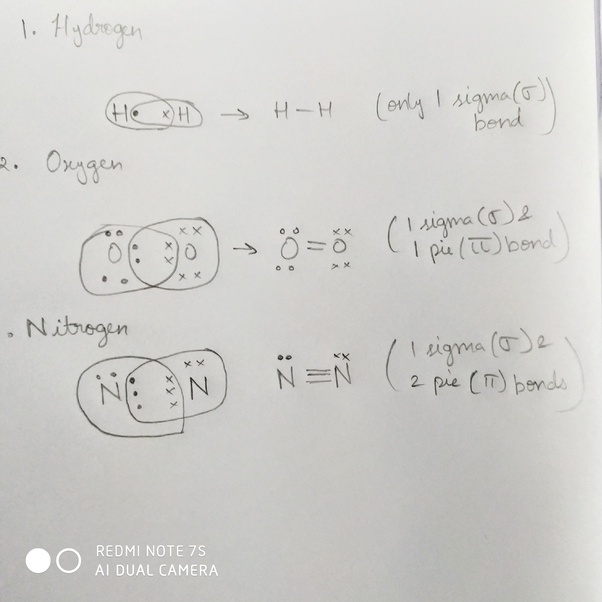
How Many Covalent Bonds Can Nitrogen Form. As for the formation of a single covalent bond, one electron is shared by each atom, thus nitrogen can share its three electrons to form 3 single covalent bonds. Either with single, double or triple bonds. Use the octet rule to predict the formula of the compound that would form between germanium and hydrogen, if the molecule contains only one germanium atom and only single bonds are formed. Therefore, a triple bond is formed between the two nitrogen atoms. Nitrogen atoms will form three covalent bonds (also called triple covalent) between two atoms of nitrogen because each nitrogen atom needs three electrons to fill its outermost shell. A nitrogen atom forms three covalent bonds. Normally a nitrogen atom forms 3 bonds, but when the nitrogen atom has a positive charge, it is deficient in an electron, so it can form an additional fourth covalent bond.
Therefore, nitrogen can form 3 single covalent bonds. Nitrogen cannot really form 5 bonds, unless you count 4 covalent bonds and 1 ionic “ bond “. Since nitrogen has five valence electrons and bonds, it uses three of its five valance electrons for bonding. Don’t get confused as in this question single nitrogen atom (n) is asked not for dinitrogen ${n_2}$. The outermost shell of these atoms, as we have seen, can accommodate up to eight electrons, and they form covalent bonds with as many other atoms as. Two or more acceptable octet lewis structures may be written for certain compounds (or ions) resonance. The reason that nitrogen can only form three covalent bonds is because,.
Nitrogen Cannot Really Form 5 Bonds, Unless You Count 4 Covalent Bonds And 1 Ionic “ Bond “.
Nitrogen typically forms 3 covalent bonds, including in n_2. These are the least stable types of covalent bonds. To form a full outer shell of 8, it needs to share 3 electrons, forming 3 covalent bonds. Will form either one, two, three or four covalent bonds with other atoms. The carbon atom has four electrons in its outermost shell and needs four more to fill it. There is a quick way to work out how many covalent bonds an element will form.
In The Formation Of A Nitrogen Molecule, For Example, Each Nitrogen Atom With Five Valence Electrons Contributes Three Electrons To Form Three Electron Pairs For Sharing.
Normally a nitrogen atom forms 3 bonds, but when the nitrogen atom has a positive charge, it is deficient in an electron, so it can form an additional fourth covalent bond. Nitrogen can form three covalent bonds, since it has a valency of 5 electrons. Will form either one, two, three or four covalent bonds with other atoms. Either with single, double or triple bonds. In the formation of a nitrogen molecule, each nitrogen atom having five valence electrons provides three electrons to each other to form three electron pairs for completing the octet. Triple covalent bonds are the least stable type of covalent bond and are represented by three dashes.
As For The Formation Of A Single Covalent Bond, One Electron Is Shared By Each Atom, Thus Nitrogen Can Share Its Three Electrons To Form 3 Single Covalent Bonds.
Nitrogen atoms will form three covalent bonds (also called triple covalent) between two atoms of nitrogen because each nitrogen atom needs three electrons to fill its outermost shell. Nitrogen cannot really form 5 bonds, unless you count 4 covalent bonds and 1 ionic ” bond “. In the formation of a nitrogen molecule, each nitrogen atoms having five valence electrons provides three electrons to. The number of valence electrons an atom possesses determines how many covalent bonds it can form. Another example of a nonpolar covalent bond is found in the methane (ch 4) molecule. Nitrogen has 5 electrons (1 pair and 3 singles) and can form three single covalent bonds or one triple covalent bond (maximum of 3 bonds).
Nitrogen Has 5 Valence Electrons.
Nitrogen can form 3 covalent bonds. Therefore, a triple bond is formed between the two nitrogen atoms. If you look at the image above, you can see that nitrogen can form four covalent bonds with one positive charge (one less electron). The outermost shell of these atoms, as we have seen, can accommodate up to eight electrons, and they form covalent bonds with as many other atoms as. By sharing six electrons on both sides of where the shells are touching, each of the nitrogen atoms can count eight electrons in the outer ring. This then makes a nitrogen molecule.
Triple Covalent Bonds Are Represented By Three Dashes (≡) And Are The Least Stable Types Of Covalent Bonds.
What happens is that because there are 5 electrons on the outer shell, two nitrogen atoms will share three of the electrons to form three covalent bonds.
Posting Komentar untuk "How Many Covalent Bonds Can Nitrogen Form"